Civic Climate Future Workshop — Lesvos, March 2026
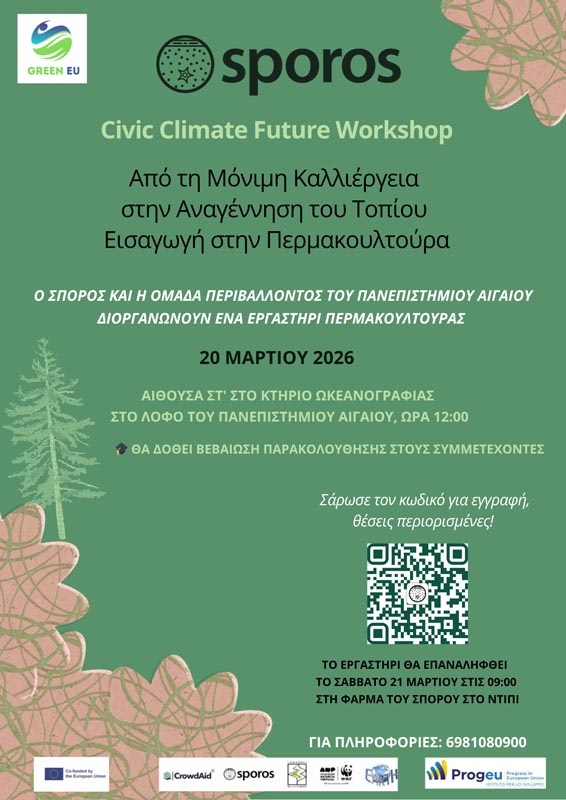
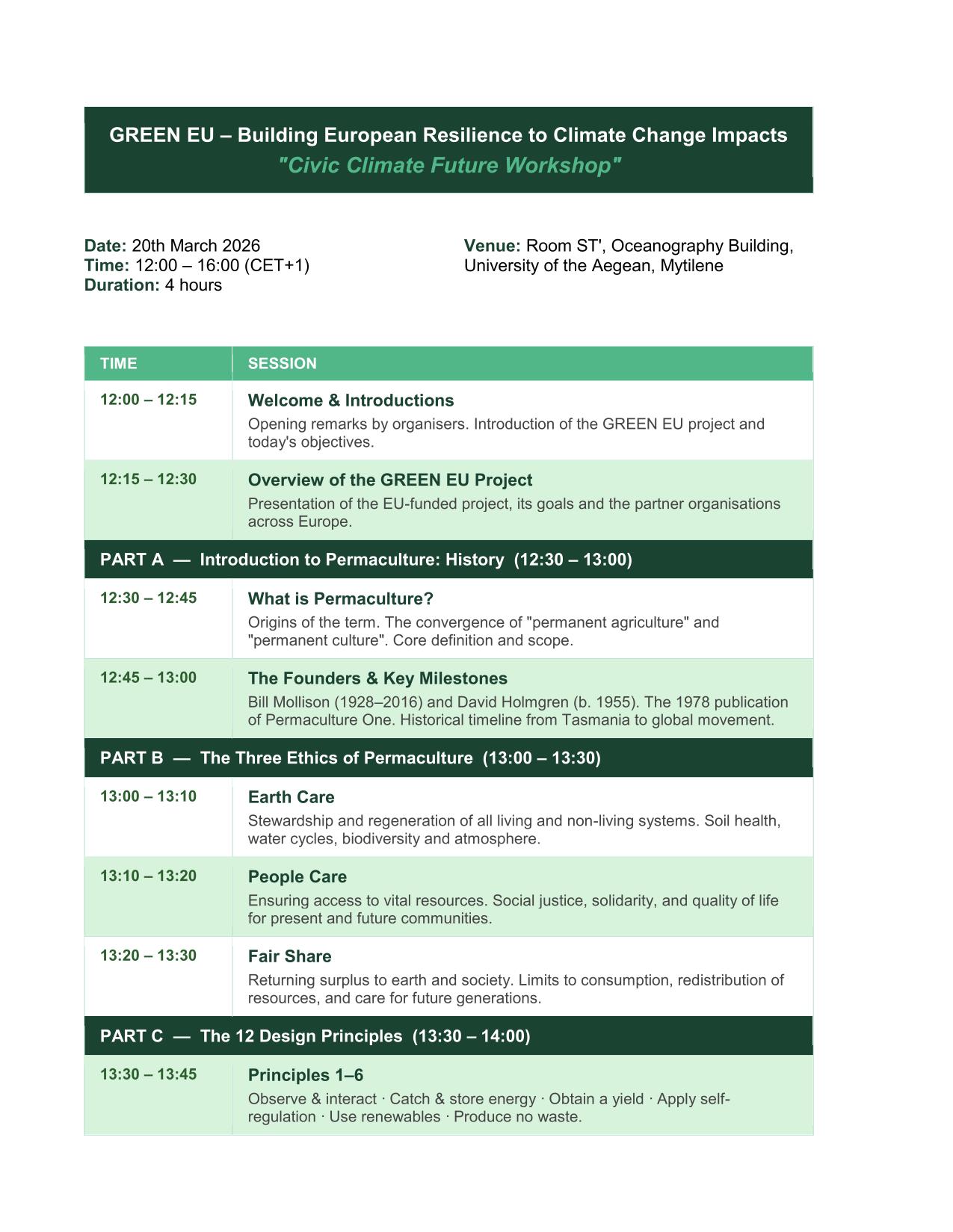
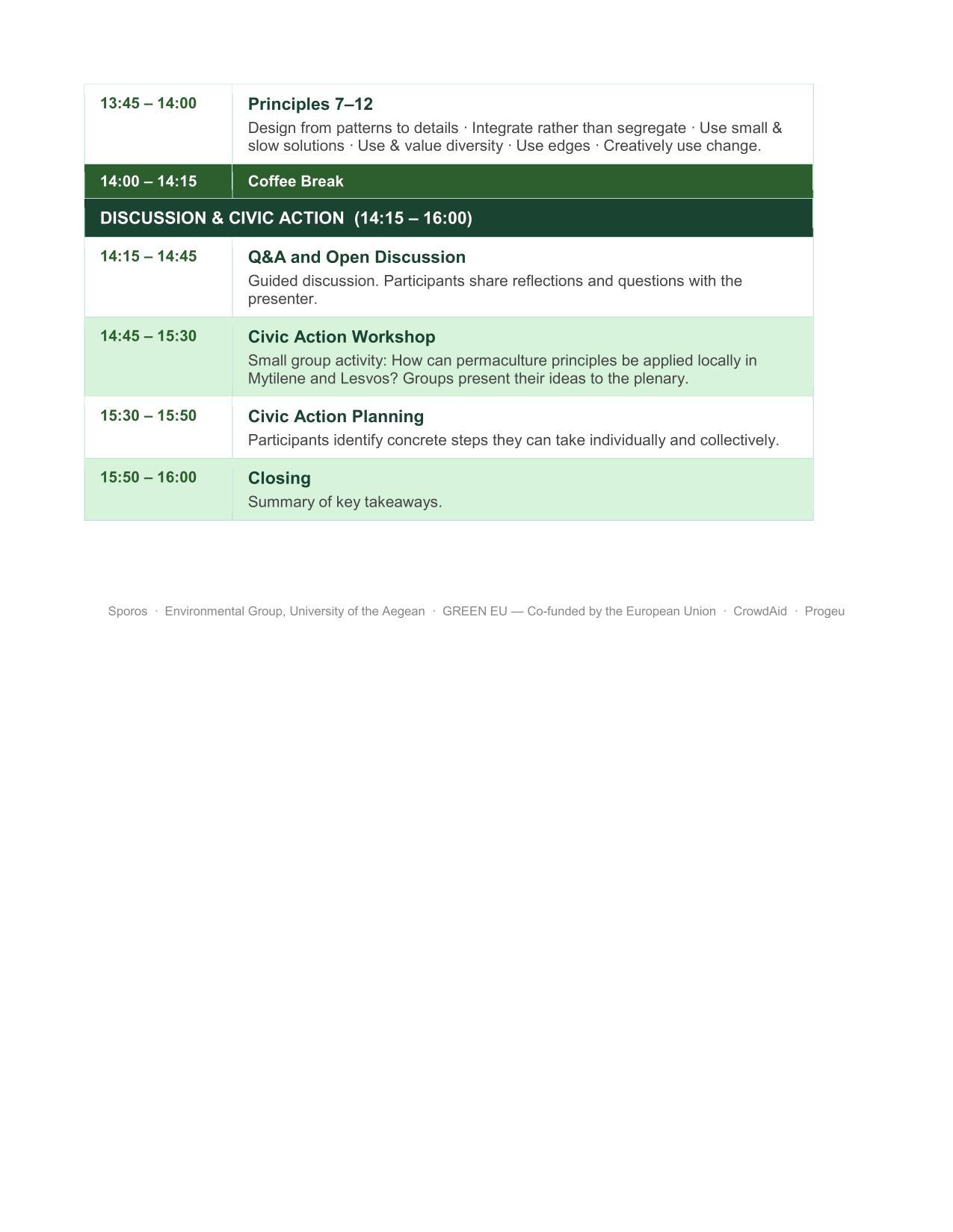
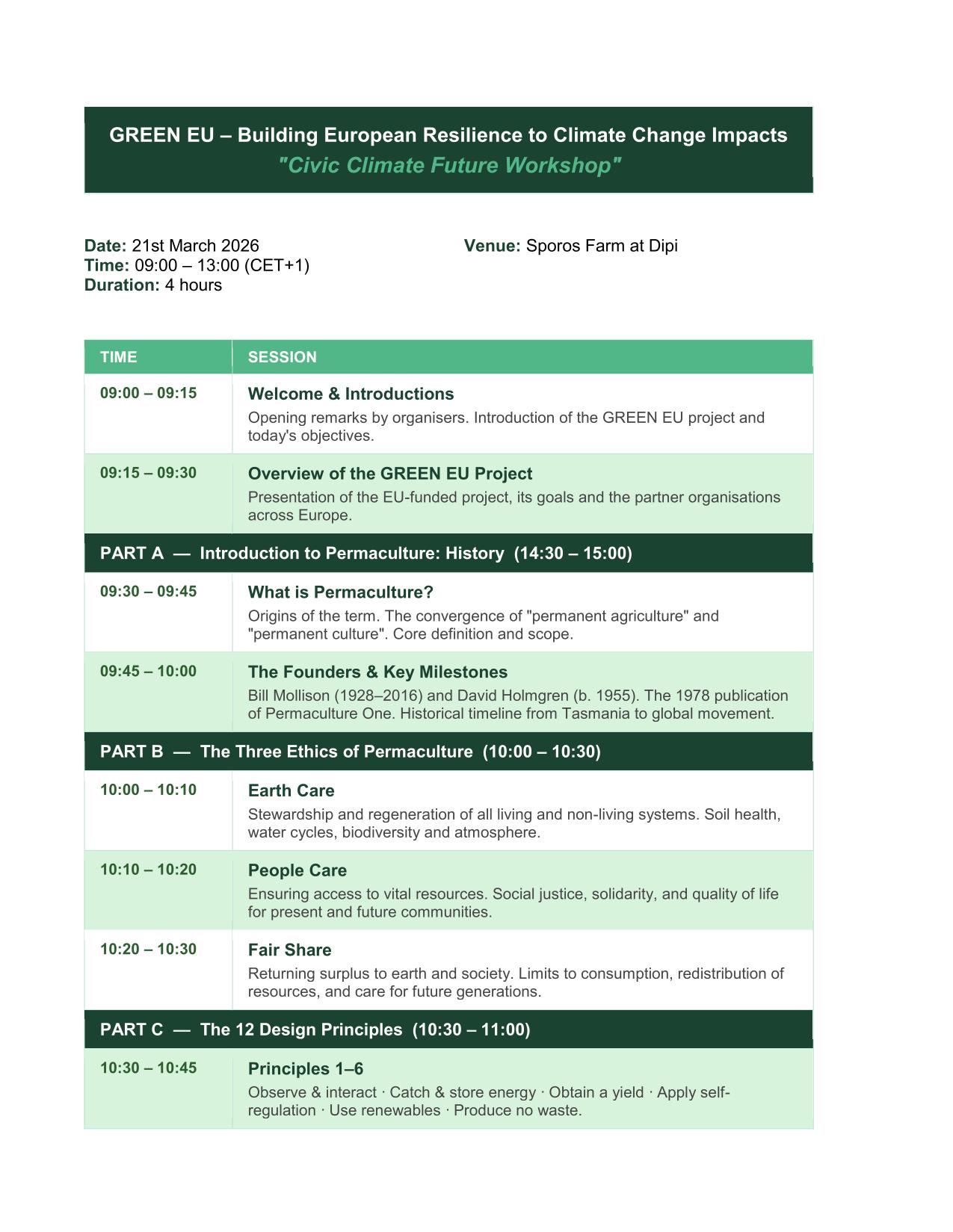
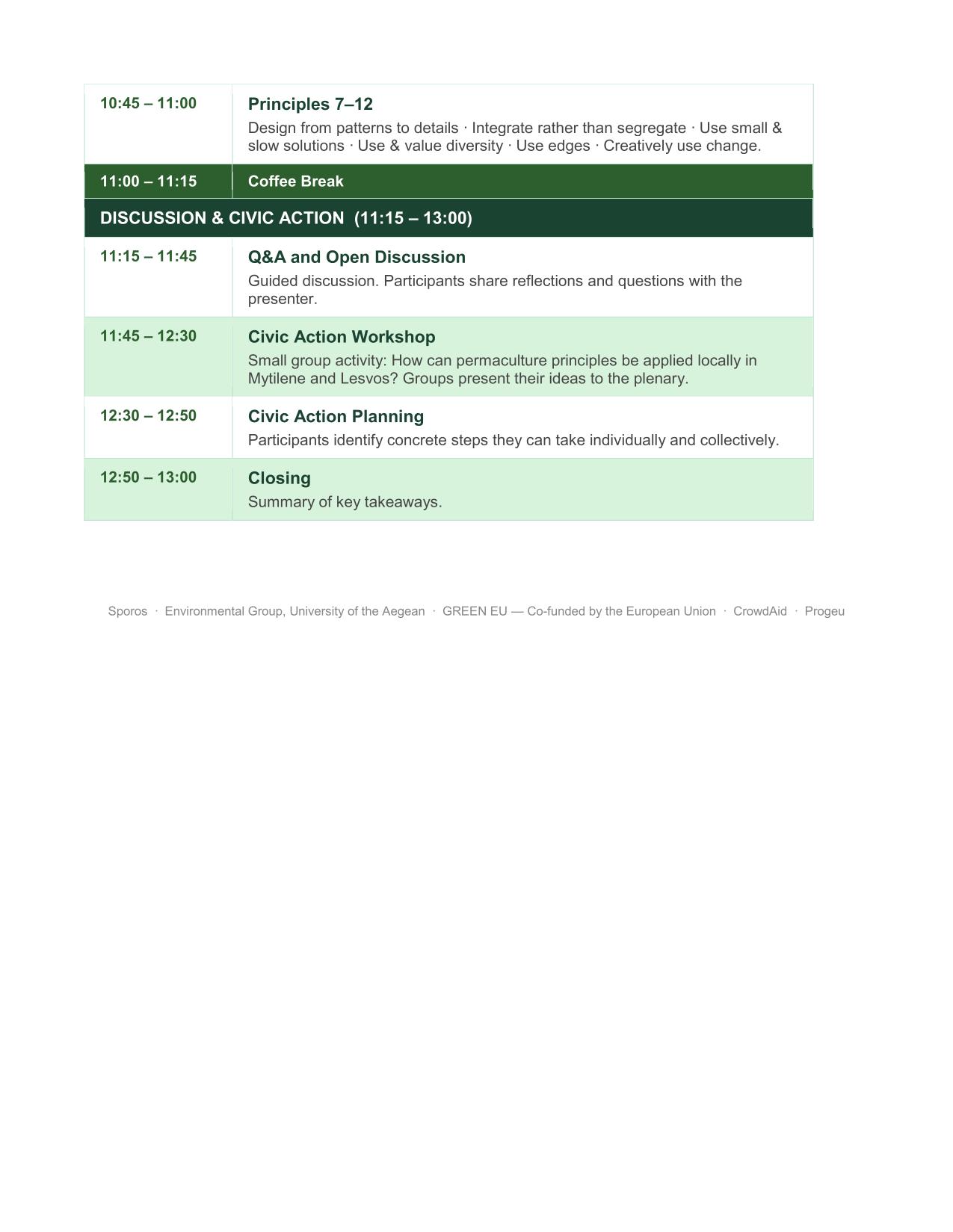
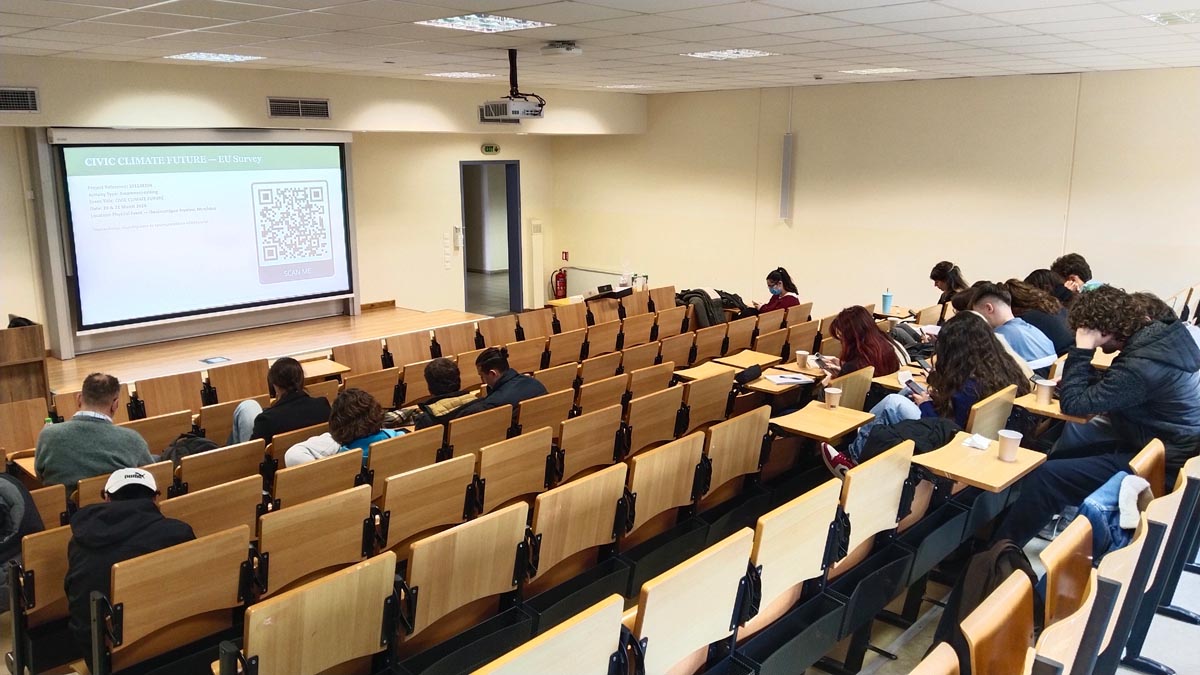
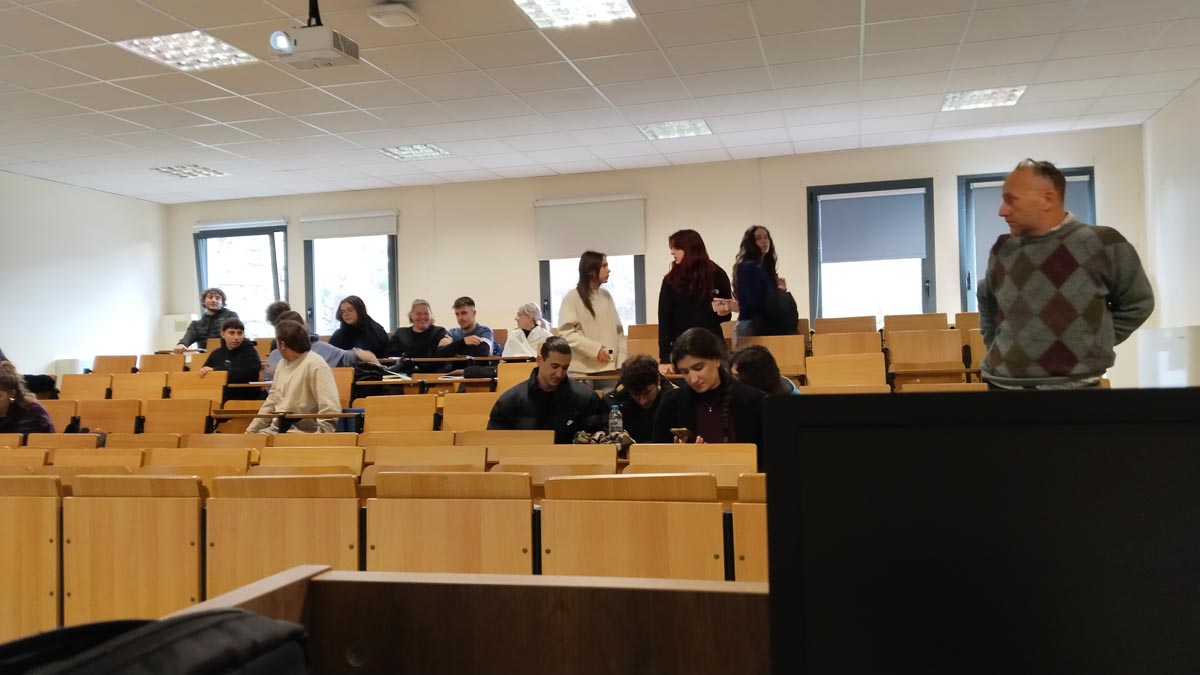
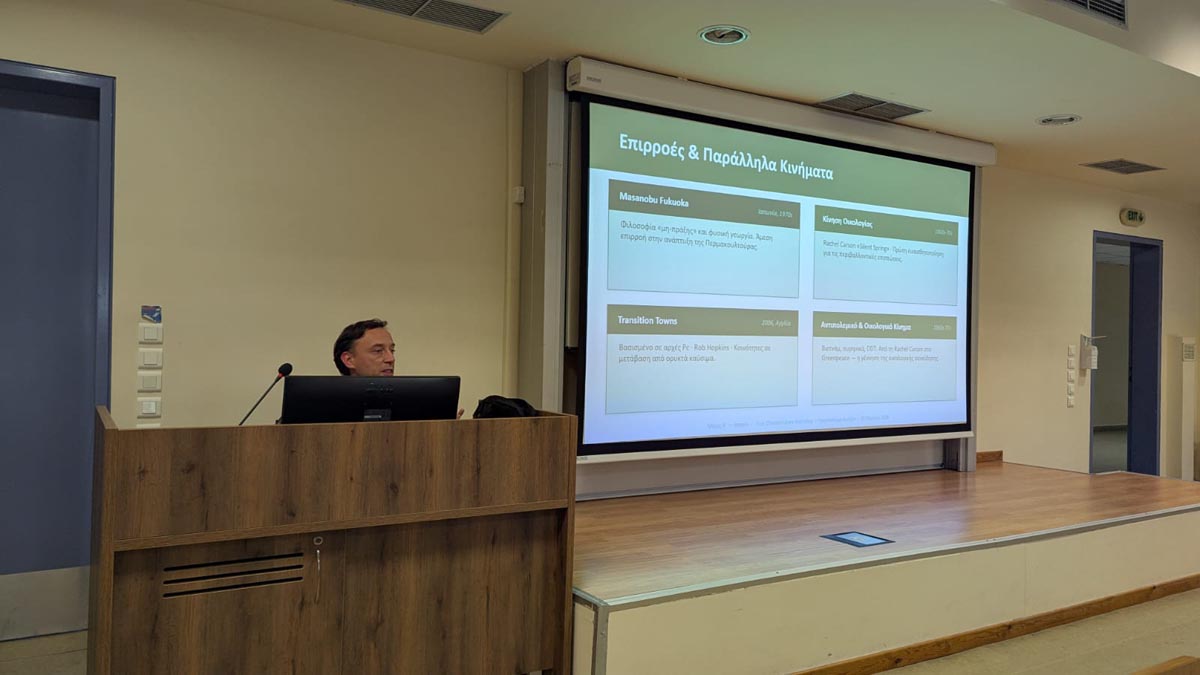
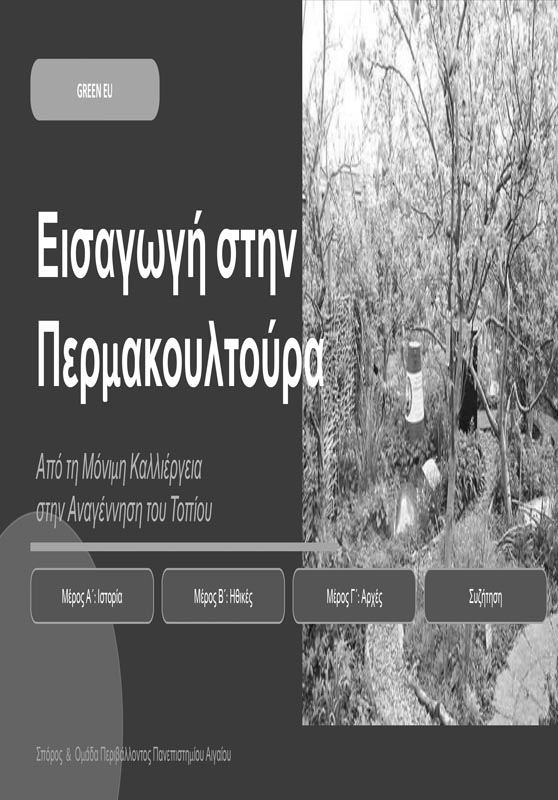
On 20 and 21 March 2026, the Civic Climate Future Workshop was held across two distinct settings on the island of Lesvos, first at the Oceanography Building of the University of the Aegean in Mytilene, then at Sporos Farm in Dipi. Each four-hour session introduced participants to the history, ethics, and design principles of permaculture, moving through guided discussion and into hands-on civic action planning. Together, the two events reached a diverse cross-section of the local community, from university students in environmental studies to working farmers and residents with deep practical ties to the land.
At the university, students engaged actively with recent peer-reviewed research validating permaculture approaches to soil regeneration, biodiversity conservation, and climate adaptation, findings that, for several participants, directly addressed scepticism they had encountered in their academic coursework. The civic action workshop that followed produced a range of concrete proposals tailored to Lesvos: a community composting network across Mytilene’s neighbourhoods, a demonstration food forest on underused municipal land near the campus, and a seasonal seed exchange connecting local farmers with student volunteers. A number of participants committed to carrying these ideas forward through existing university environmental initiatives and collaborations with local producers.
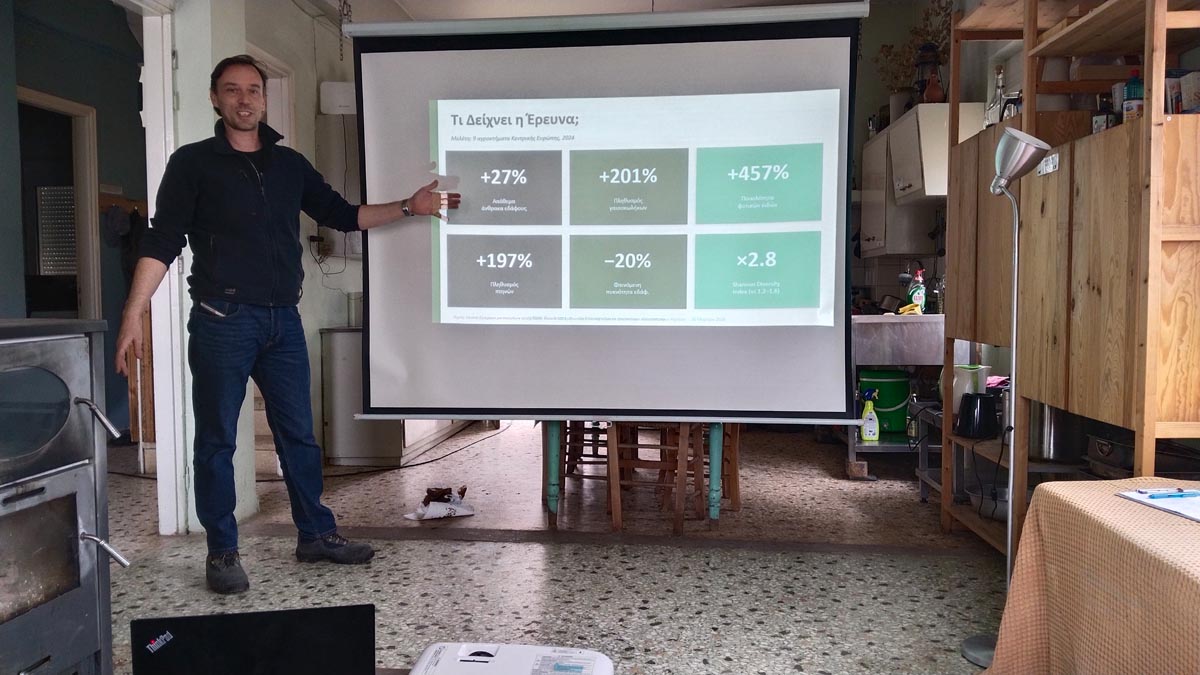
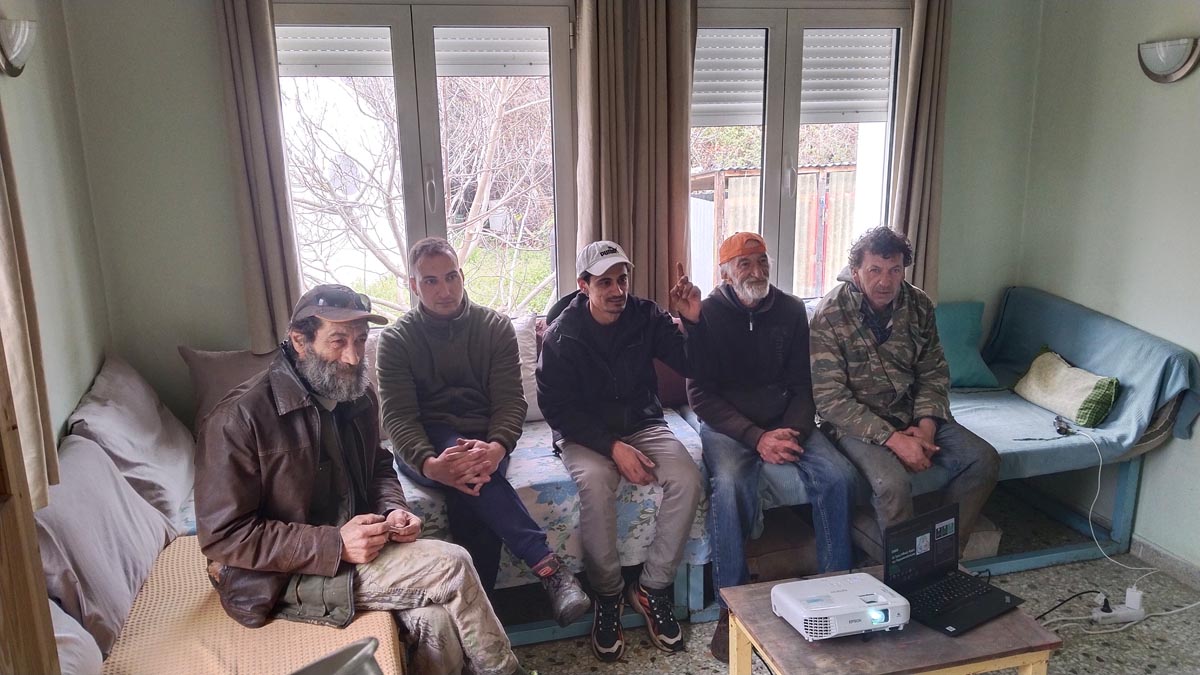
The Dipi session, held at Sporos Farm amid persistent morning rain, brought a smaller and markedly different group together. The two farmers in attendance engaged readily with the practical dimensions of earth care and natural systems, grounding the discussion in lived experience. While the open-ended format of the civic action workshop required more structured facilitation with this group, the outcomes were no less meaningful: proposals included a rainwater harvesting demonstration at a local smallholding and a tool- and seed-sharing arrangement among neighbouring households. Both farmers left with a commitment to trialling specific water-retention techniques on their own plots.
Across both days, the workshop demonstrated that permaculture principles can resonate across very different contexts and audiences. Whether in an academic setting or on a working farm, participants found genuine entry points into the subject.
Funded by the European Union. However, the views and opinions expressed are solely those of the author(s) and do not necessarily reflect those of the European Union or the European Education and Culture Executive Agency (EACEA). Neither the European Union nor the EACEA can be held responsible for them. (Project No. 101148104)
Copyright 2021 @ Sporos Regenaration Institute info@sporosinstitute.org Milies Village, Lesvos, Greece Contact: +30 698 108 0900
This website uses cookies to improve your experience. We'll assume you're ok with this, but you can opt-out if you wish. Cookie settingsACCEPT
Privacy & Cookies Policy
Privacy Overview
This website uses cookies to improve your experience while you navigate through the website. Out of these cookies, the cookies that are categorized as necessary are stored on your browser as they are essential for the working of basic functionalities of the website. We also use third-party cookies that help us analyze and understand how you use this website. These cookies will be stored in your browser only with your consent. You also have the option to opt-out of these cookies. But opting out of some of these cookies may have an effect on your browsing experience.
Necessary cookies are absolutely essential for the website to function properly. This category only includes cookies that ensures basic functionalities and security features of the website. These cookies do not store any personal information.
Any cookies that may not be particularly necessary for the website to function and is used specifically to collect user personal data via analytics, ads, other embedded contents are termed as non-necessary cookies. It is mandatory to procure user consent prior to running these cookies on your website.